
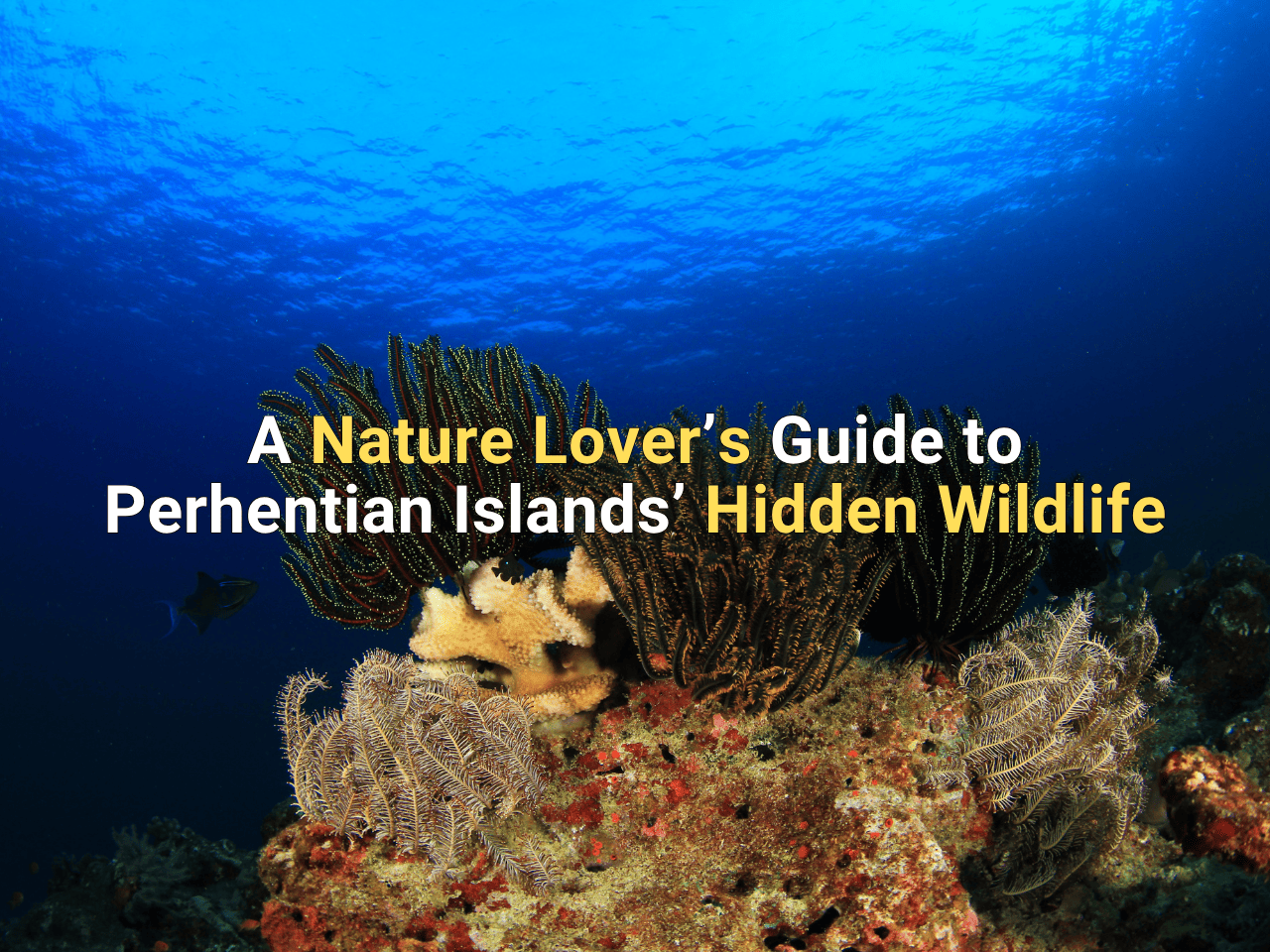
When people think of the Perhentian Islands, they often picture coral reefs and turquoise seas — but the beauty doesn’t stop at the shoreline. Beyond the beaches lies a lush tropical ecosystem filled with unique plants, colorful birds, and peaceful jungle trails waiting to be explored.
Whether you’re a birdwatcher, botany lover, or just someone who enjoys quiet walks in nature, this guide takes you beyond the reef and into Perhentian Islands greener side — where the rustling leaves and chirping birds tell a story of their own.
Coastal Plants & Beach Vegetation
Walk along the beaches of Perhentian Besar or Kecil and you’ll notice hardy plants that thrive in sandy soil and salty air. One of the most common is sea morning glory (Ipomoea pes-caprae) — a creeping vine with purple flowers that helps stabilize the dunes and prevent erosion.
You’ll also spot casuarina trees, pandanus palms, and hibiscus shrubs lining the coast, adding shade and color to the scenery. These coastal plants aren’t just beautiful — they’re nature’s first defense against strong winds and tides, helping protect the beaches from erosion.
Traveler’s Tip: Early mornings are perfect for a beach walk. The air is cooler, and you might catch sight of small crabs or monitor lizards basking quietly near the vegetation.
Mangroves & Medicinal Herbs
While Perhentian Islands isn’t known for large mangrove forests like other islands, small mangrove patches can be found around Teluk Dalam and Petani Beach. These areas are vital nurseries for young fish, crabs, and even baby sharks, playing a key role in the marine ecosystem.
Locals also recognize several plants for their traditional healing uses — from lemongrass (serai) and betel leaves (sirih) for their antibacterial properties to tongkat ali, a root used for energy and stamina. Inland trails sometimes reveal wild ginger and other native herbs that reflect the rich biodiversity of Malaysia’s east coast flora.
Traveler’s Tip: Take photos, not samples! Many of these plants are protected and should be admired without disturbing their natural growth.
Common Birds of the Islands
Perhentian Islands skies are alive with tropical melodies. Keep your eyes and ears open for:
White-bellied sea eagles, often seen soaring high above the water, scanning for fish.
Collared kingfishers, perched quietly on branches near the shore.
Pacific swallows darting gracefully between trees and resorts.
Magpie-robins and sunbirds filling the mornings with song.
Occasionally, hornbills can be spotted flying over the forest canopy of Perhentian Besar — a rare treat for patient birdwatchers.
Traveler’s Tip: Bring binoculars if you have them. Dawn and dusk are the best times for spotting birds when they’re most active.
Best Spots for Nature Walks & Birdwatching
If you want to explore Perhentian Islands’ greener side, several jungle trails offer easy access to nature:
Long Beach to Coral Bay, Perhentian Kecil — A short, scenic trail under tropical trees where you can see butterflies and small reptiles.
D’Lagoon to Turtle Bay — A lesser-known route surrounded by dense forest and ocean views, great for spotting birds and hearing the rustle of wildlife.
Flora Bay to Teluk KK, Perhentian Besar — A beautiful nature trail often shaded, connecting two quiet beaches perfect for an early morning trek.
Perhentian Besar’s South Point Trail — Excellent for sunrise walks, and you might catch sight of hornbills or monitor lizards.
Traveler’s Tip: Wear proper walking shoes and carry water — trails can be uneven or slippery after rain.
Best Time for Wildlife Spotting in Perhentian Islands
Wildlife activity in Perhentian Islands changes throughout the day, and timing can greatly improve your chances of spotting animals in their natural habitat.
Early mornings are the most rewarding. As the jungle wakes up, birds become highly active, monitor lizards may be seen near quiet beach edges, and butterflies flutter between coastal plants. The cooler temperatures also make jungle walks more comfortable.
Late afternoons are another great window. As the heat softens, birds return to lower branches, and you may notice more movement around forest trails and shaded areas. Around sunset, the islands become quieter, and nocturnal creatures begin to appear.
Nighttime brings a completely different ecosystem to life. Geckos, crickets, and other jungle insects create a constant natural soundtrack, while occasional sightings of bats or nocturnal birds add to the island’s mystery.
Traveler’s Tip: If you want the best chance of seeing wildlife, plan at least one walk just after sunrise and another just before sunset.
Hidden Wildlife You Might Encounter
Beyond the commonly seen birds and coastal plants, Perhentian Islands is home to many small but fascinating creatures that often go unnoticed.
- Hermit crabs – found along sandy beaches, especially in the early morning when the shore is quiet.
- Butterflies – different colors and sizes are common near flowering plants along jungle edges.
- Long-tailed macaques – occasionally appear in forested areas, especially near food sources.
- Flying insects and beetles – more visible during humid evenings, contributing to the island’s rich biodiversity.
- Small reef-associated creatures – such as mudskippers near mangroves, highlight the connection between land and sea ecosystems.
While these animals may not always be easy to spot, they form an important part of the island’s ecological balance.
Traveler’s Tip: Move slowly and quietly during walks — sudden movements often scare away smaller wildlife before you notice them.
Tips for Responsible Wildlife Observation
To protect the islands’ fragile ecosystem, keep these eco-friendly tips in mind:
Keep a respectful distance from wildlife — binoculars are better than flash photography.
Avoid loud noises — let nature’s rhythm fill the air.
Never feed animals — it changes their behavior and diet.
Stay on marked trails — avoid trampling delicate plants.
Bring back only photos — leave everything else as you found it.
By observing responsibly, you help preserve Perhentian Islands’ natural beauty for generations to come. The Perhentian Islands are part of a protected marine park established in 1994.
Nature Photography Tips for Flora & Fauna Lovers
If you’re interested in capturing the natural beauty of Perhentian Islands, a few simple techniques can help improve your photos significantly.
- Use natural light whenever possible — early morning and late afternoon light creates softer tones that highlight plant textures and bird details.
- Get closer to the ground for macro shots of flowers, insects, and coastal vegetation.
- Use zoom or telephoto settings for birds and animals to avoid disturbing them.
- Focus on composition by including natural elements like branches, water reflections, or jungle layers to create depth.
Even simple mobile phone cameras can produce stunning results when used thoughtfully in natural environments.
Traveler’s Tip: Turn off flash when photographing wildlife — it can disturb animals and reduce image quality in natural light settings.
Where to Stay Close to Nature
Whether you prefer luxury villas, beachfront resorts , or budget stays, Perhentian Islands has the perfect place for you to wake up to the sounds of nature.
D’Lagoon Chalet, Perhentian Kecil — A rustic stay near lush jungle and a calm beach, ideal for birdwatchers.
Alunan Resort, Perhentian Kecil — Built with eco-friendly architecture, offering ocean views and forest sounds.
Bubu Villa, Long Beach — Perfect blend of comfort and nature, with tropical gardens and birdsong right outside your door.
Flora Bay Resort, Perhentian Besar — Close to forest trails and perfect for travelers who love morning walks.
The Perhentian Islands are more than a diver’s paradise — they’re a living ecosystem where land and sea coexist in harmony. From the creeping vines that guard the beaches to the eagles soaring overhead, every element contributes to the islands’ fragile yet fascinating balance.
So the next time you visit, step off the sand and wander into the trails. You might discover that Perhentian Islands’ most breathtaking wonders don’t always swim — some grow, bloom, and fly.